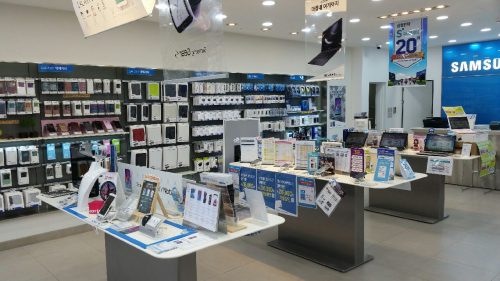
It might be difficult to choose the finest Android phones, but we’ve compiled a list of the best of the best that run Google’s operating system to assist you. To help you make a buying decision, we’ve ranked our choices in order of preference and included an overview and specs list for each, as well as a quick look at their best and worst features in the blog of phone shop Singapore. Considering what you need from a smartphone and how much you want to spend before grabbing the number one entry; another phone here might be a better fit for you. These are usually the most costly models since they are the greatest, although there are exceptions.
- Samsung Galaxy S21 Ultra: Samsung’s top, premium flagship for 2021 is the Galaxy S21 Ultra, and what a phone it is. For the first time, Samsung has included S Pen functionality on an S-range handset, allowing you to obtain the Galaxy Note’s finest feature as an alternative. Even without it, this is a gorgeous device, with a fantastic quad-lens camera that can achieve 10x optical magnification. In fact, we called it the finest camera zoom on any available commercially Android phone in our review. The Samsung Galaxy S21 Ultra boasts a smooth Gorilla Glass back with a matte finish that appears better than the reflective Galaxy S20 range, and a curved edge-to-edge 6.8-inch screen on the front. Speaking of the screen, it’s the first Samsung phone to include both a QHD+ resolution and a 120Hz refresh rate. And, as a Samsung high-end screen, it’s one of the best. Of course, there’s plenty of power here, and while it’s obviously pricey, the Samsung Galaxy S20 Ultra had a lower starting price at launch.
- OnePlus 9 Pro: OnePlus phones used to cut compromises to keep their prices cheaper than competitors, but that’s no longer the case with the OnePlus 9 Pro. It’s a superb phone in every regard, yet it’s still slightly less expensive than most comparable handsets. It’s the greatest OnePlus camera phone, with a huge, sharp, and all-around high-quality 120Hz screen, top-end power from its Snapdragon 888 processor, a massive battery with quick charging whether wired or wireless (at 65W and 50W respectively), and a premium metal and glass frame – with water resistance. This is noteworthy because it’s an area where OnePlus has previously failed to compete. However, the OnePlus 9 Pro is the first fruit of new cooperation with Hasselblad, and the camera brand’s competence shines through in our review, leaving us impressed. All of this high-end tech means the OnePlus 9 Pro is more expensive than previous models in the series, which is the main criticism, but it’s difficult to say you’re not getting your money’s worth.
- Samsung Galaxy S21: The Samsung Galaxy S21 is the most fundamental and budget-friendly of the Galaxy S21 lineup, but it offers a lot more than just a low price. The triple-lens camera is extremely adaptable, with the three fundamental lenses, we’d expect from a high-end smartphone – the main lens, a telephoto lens, and an ultra-wide lens. In our experience, they all do a good job. There’s also plenty of power, a long battery life, and a 120Hz AMOLED display. It’s also smaller than the rest of the S21 lineup, at 6.2 inches, making it suitable for those who don’t want a big phone. The Samsung Galaxy S21 is not only the most inexpensive of the line, but it’s also a step lower in price from its predecessor, making it a bit of a steal – but the screen quality has been reduced to Full HD+ to achieve this.
- Xiaomi Mi 11: The Xiaomi Mi 11 isn’t the Mi 11 Ultra, which is the top of the Mi 11 line, but it’s still a great Android phone with plenty of power and a good camera. There’s a 108MP f/1.9 main lens and a 13MP f/2.4 ultra-wide lens, both of which are good, but the camera’s star is its 5MP telemacro snapper, which we found to be significantly better than most phone macro cameras and works from further away. The Xiaomi Mi 11 also sports a fantastic 6.81-inch 1440 x 3200 AMOLED screen with a 120Hz refresh rate, as well as a fast-charging wired and wireless battery. In our tests, the Xiaomi Mi 11’s battery life wasn’t spectacular, and we wish it had a telephoto camera, but it’s still a wonderful flagship.
When purchasing an Android phone, the screen size and resolution, battery life, power, camera performance, and price are usually the most important factors to consider. The greatest ones will succeed in most, if not all, of these categories, but at a significant cost. Bigger isn’t necessarily better when it comes to screens. Leaving you with this thought, hope this blog – phone shop Singapore was a beneficial read.