



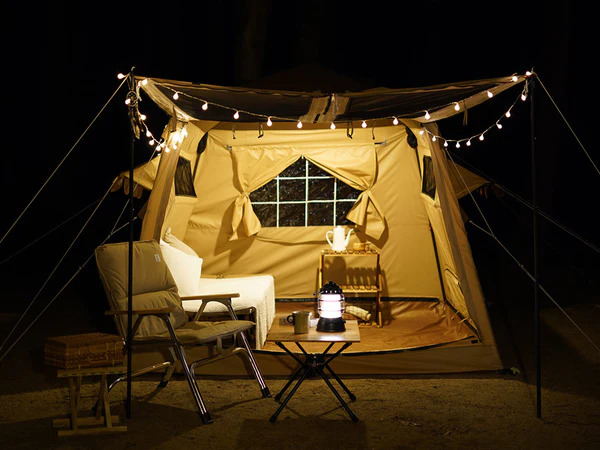
Hikers, backpackers, mountaineers, and survivalists have all spent years discussing this topic. Where can I find the safest place to take shelter? Do you mean the tarp that can be set up in a zillion different ways? And what about the tent, that old standby?
You’ve come to the perfect spot if you’re still undecided on which shelter to bring or if you’re thinking about making a change. We’ll help you decide between a tarp and a tent by outlining their benefits and drawbacks.
Is there a clear winner among the many shelter options? Have you got to know? Keep reading to find out!
What Is a Tent?
Tent camping involves staying in a makeshift shelter that is weatherproof and roomy enough to stand up inside. Most tents made specifically for backpacking have either a semi-geodesic or a geodesic shape. Because of their unusual form, they can withstand even the worst climates without losing their structure or longevity. They weigh next to nothing (relative to other camping gear), so you can take them on long trips and wild camps without worrying about carrying too much extra weight.
What Is Tarp?
The tarp represents the flip side. Whoever thought of utilizing tarps as protection from the elements was on the right track. Poles for tarp were often used by sailors to shield their cargo from the elements. Tarps may be used to protect almost everything in modern society.
Modern tarps for camping come with grommets that allow easy attachment to ropes and another cordage for securing or suspending the tarp. They are often constructed from polyethylene or vinyl, two synthetic materials are known for their toughness and flexibility.
Tarps are well-known for their versatility and durability, not only as a means of protection from the elements. You may use them to carry water or to treat wounds. This is why many survivalists and extreme campers over tents favor tarps.
Why Tarps?
Easy To Carry And Adaptable
Lightweight tarps are favored by many wild campers, especially ultralight backpackers on long trips. Because of their basic construction, tarps are very featherweight; some weigh just a few hundred grams. The tarps come with their special poles for tarp, but there are several ways to pitch them: walking poles or attaching them to trees to make them lighter.
Spacious
It may become a bit snug in a one-person or two-person tent, depending on the number of campers. A tarp’s lack of walls creates a more spacious tent, improving your camping experience.
Why Tent?
Environmental Safeguards
Tents greatly enhance shelter from the elements. They’re more clearly built, so you’ll have a roof over your head and four walls to call your own. This is particularly helpful for camping in damp or cold weather or when bugs are prevalent. Typically, tents will protect you from rain and insects.
Modular Design
Although tarps are quite easy to use, they might be challenging for single travelers to set up. Thanks to their pole and peg structure, tents are designed to remain in place while being put up. Tents have an advantage over tarps since they may be set up on any surface without the need for stakes.
It’s possible we haven’t settled the long-standing dispute between tarp shelters and tents, but we hope to have provided some useful insight into the topic.
They both provide substantial advantages and are not without their drawbacks. DOD improves your time spent in the great outdoors with loved ones. Reach out to them if you need any assistance.