


High-impact training depends on confidence. Athletes and participants need to commit to movement,practise falls or work at speed without becoming distracted by avoidable hazards around the training area. Safety measures should support that confidence while preserving the conditions needed for effective practice.
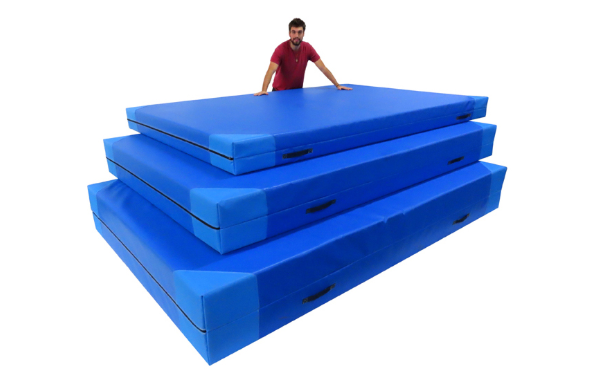
The first step is to match protection to the activity. A low-speed mobility session does not create the same demands as gymnastics, martial arts, climbing practice or stunt work. The height of a fall, likely landing position, frequency of impact and surrounding equipment all affect what protection is appropriate. Crash mats may form part of that setup, but they need to be selected and positioned for the specific training task rather than treated as a universal solution.
Surface condition matters just as much as the equipment itself. Gaps, curled edges or shifting protective surfaces can introduce new risks, especially when people are moving quickly. Training areas should therefore be checked before use, with particular attention to transitions between surfaces and any places where people are expected to land. If mats are moved between exercises, their position should be reconsidered each time rather than assumed to remain suitable.
Good supervision also protects performance. Clear instructions about where a movement starts, where it should finish and what happens if a participant loses control can reduce hesitation. Coaches can establish consistent signals and keep unnecessary people or equipment outside active zones. These simple controls make the space more predictable, which is especially useful when several participants are training in sequence.
Protection should not encourage careless progression. Softer landing areas can make practice more comfortable, but they do not replace technique, suitable coaching or gradual skill development. Crash mats are most useful when they support a planned exercise with known risks. Participants still need to learn how to control movement and respond safely when an attempt does not go as intended.
The layout of the room has a strong influence too. High-impact movements need enough clearance from walls, posts, stored equipment and other training groups. Where fixed hazards cannot be moved, protective measures may be appropriate, but layout should be considered first. Moving a drill by a small distance can sometimes remove an exposure more effectively than adding another layer of equipment.
Equipment condition should be part of routine checks. Protective products can wear, compress or become damaged over time, and covers may need cleaning or repair according to the manufacturer’s guidance. Crash mats should be taken out of use if damage affects their function or creates a trip or contact hazard. The exact inspection approach will depend on the product, frequency of use and training environment.
Safety and performance are not opposing goals. A well-organised space lets participants concentrate more fully because the boundaries and expectations are clear. Coaches can then focus on movement quality instead of constantly correcting the environment around the exercise. Protective equipment supports that system when it is chosen for the activity, maintained properly and combined with sound training practice.
Progression planning is another practical control. Participants can rehearse a movement at lower speed, reduced height or smaller range before increasing intensity, depending on the skill being trained. That gives coaches a chance to observe technique and adjust the environment before the highest-impact attempts begin. It also helps identify when a participant is tired or losing consistency, which may be a reason to change the exercise. The appropriate progression will vary by discipline, so it should be based on coaching judgement and the demands of the specific skill rather than a fixed formula. Communication between participants matters too. When exercises involve partners, spotters or shared equipment, everyone should understand the sequence and role before starting. Unclear handovers can create avoidable movement in areas that need to stay controlled.
The safest high-impact session is not the one with the most padding. It is the one where risks have been considered in context and controls do not interfere with the skill being learned. That balance helps people train with purpose while keeping avoidable hazards out of the way.