




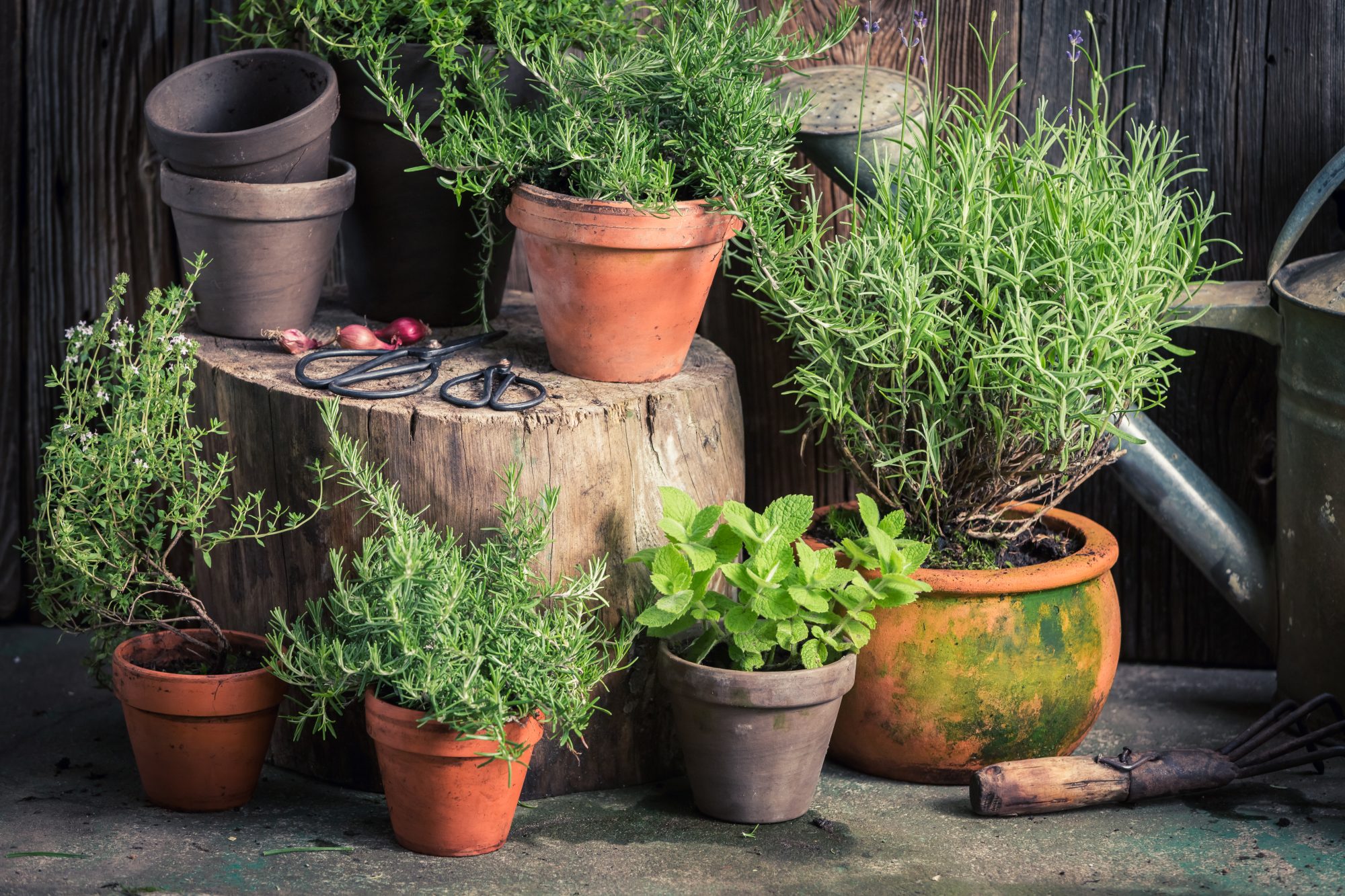
They do not require pruning, they require a certain amount of untidiness, they are an oasis for native insects and birds and, above all, they are easy to grow because they develop perfectly in the local climate. We tell you the design tricks to include in your garden. All these native plants are available at our garden centre.
A source of inspiration for many landscape designers, native plants provide essential benefits for preserving the environment and require less labour and resources to develop than other species. Its wild and spontaneous imprint achieves a simple landscape that dialogues in harmony with the environment.
Most of the autochthonous species live in the conditions in which our garden or park is found and adapt to the local climate: they tolerate frost, wind, and rain very well, so they only require watering when planting or -some species- during very hot summers dry when young.
Nor do they require additional pruning, fertilisers, or substrates, since the flora of each locality evolves with the soil of the site.
More Benefits?
The natives also attract butterflies, bugs, beetles, and other animals that are essential for biological pest control, pollination, dispersal, and natural “pruning”.
Known as ceibo or Weibo, Erythrina crista-Galli is a native tree that lives spontaneously in forests, grasslands, and jungles in the centre and north of the country, up to Buenos Aires.
Tips For Designing A Garden With Native Species
- Plan the cultivation of the species according to the communities of the region (forests, jungles, grasslands), associating the native plants that attract attention with the others typical of the natural cast.
- Project the layout and circulations avoiding straight lines and symmetry that harden the space, and look for spontaneous, irregular, curved, or asymmetric forms.
- Generate a variety of environments that will enrich the spatial quality and provide a diversity of microsites for the local fauna. For example, crops, clumps of shrubs, herbaceous groups, open and sunny sites, the presence of water, and pasture areas.
- Grouping the plants in pure clumps, since it has a more powerful effect on the scenic value of the garden and is also attractive to butterflies and other insects that perceive large surfaces more easily.
- Delimit some sectors to contain certain “untidiness”, defined as areas without frequent mowing, dead or dry branches, leaf litter on the ground, plants with dishevelled, stunted, irregular or asymmetric crowns or branches; where domestic animals do not have as much space and thus birds and other animals that require privacy can land.
- Add water: a mirror, a stream, or simply a pond provides other conditions to grow different species (aquatic and marsh). They also attract animals that do not appear in high places such as shore birds, fish, frogs and toads, and others.
- Understanding that green space, of whatever scale, is part of a broader network of biological corridors that links each vestige of nature together so that no individual contribution is isolated.
- Consider the garden as a dynamic space for enjoyment and not just for working: allowing some sectors to be more akin to spontaneous and wild forms than to the work itself.
Grow And Propagate Native Plants
The grasses or herbaceous can be divided into tufts or cut portions of rhizomes or tuberous roots. Climbers, on the other hand, often grow by segments or layers: portions of stems that take root from nodes that we wrap with the substrate in bags or containers and cut from the mother plant once they have roots.
For trees and shrubs -and for most species-, although they grow from segments, it is advisable to grow them from seeds, since in this way we manage to have genetic variation. In the propagation, there is no exchange of genes and the plant that is obtained is the same as the mother plant.