


A wallet is a small product, and it’s easy to assume it needs only a little thought when it comes to packaging. That assumption costs brands money. A wallet is often a gift, a first impression, and a leather good that the customer expects to arrive in perfect condition. If the box crushes in transit or the wallet slides around inside it, the customer remembers the damage, not the craftsmanship.
Two things decide whether wallet packaging works: how the box is built and what sits inside it. Let’s look at both.
The Box Is Doing More Than Holding the Wallet
Most buyers never think about box structure until it fails. A flimsy lid, a corner that dents, or a base that sags under a little weight changes how they feel about the product before they’ve even touched it.
Wallets are flat and light, but that doesn’t make them forgiving. Leather scuffs, stitching can pick up pressure marks, and metal hardware like snaps or logo plates can scratch the surface around them. The box’s structure has to protect against all of this while still looking like something worth keeping.
Choosing the right box style
The most common structures for wallet packaging are:
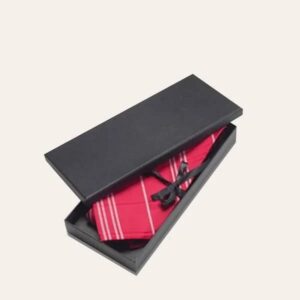
- Rigid two-piece boxes (lid and base). These are the classic premium choices. The thick board resists crushing and holds its shape for years, which is why many customers keep the box after the wallet is removed.
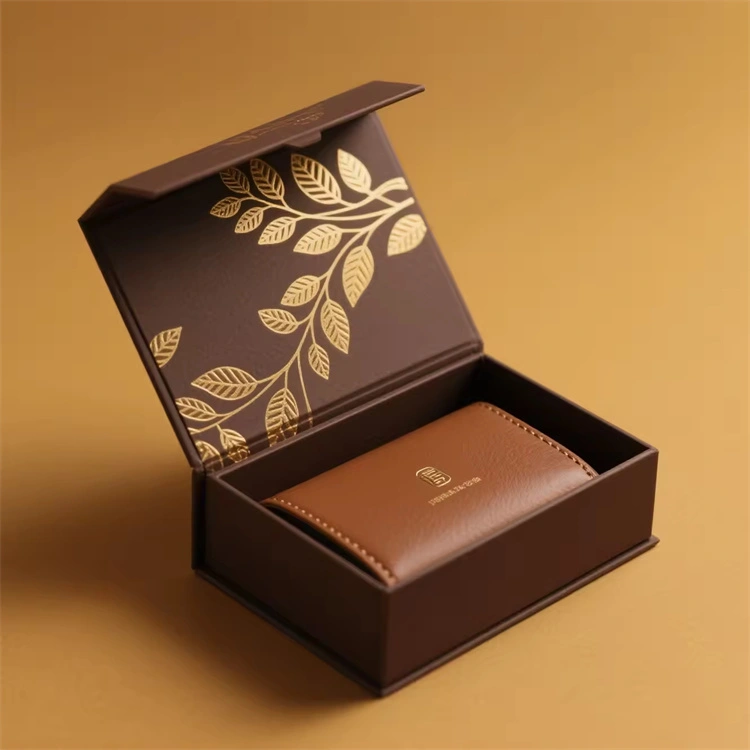
- Magnetic closure boxes. The flap shuts with a clean, satisfying click. They feel expensive and keep the lid firmly in place during shipping.
- Drawer or sleeve boxes. These slide open like a matchbox. They create a nice unboxing moment, though the sleeve needs to fit snugly, or the drawer will slip out in transit.
- Folding cartons. Lighter and cheaper, these suits are ideal for entry-level or high-volume lines where cost matters more than a luxury feel.
None of these is the best option on its own. A men’s leather bifold sold at a premium price point deserves a rigid box. A budget card holder sold in bulk may do perfectly well in a well-made folding carton. The structure should match the product’s price and the story the brand wants to tell.
Board Thickness and Construction Quality
Here’s something that often gets overlooked: two boxes can look identical in a product photo and behave very differently in real life.
Board thickness, usually measured in GSM or millimetres, affects how the box handles stacking, shipping, and handling. Thin board bends at the corners and loses its shape. Thicker greyboard holds its edges and keeps the lid sitting flat. Wrapping paper matters too, because cheap wrap peels at the corners and shows glue lines.
Details like reinforced corners, tight lid-to-base tolerances, and clean edge wrapping set boxes apart that feel considered, rather than those that feel assembled in a hurry. Customers notice these things even if they can’t name them.
Why Interior Cushioning Is Not Optional
A sturdy outer box protects against crushing. It does very little to stop the wallet from moving inside. That’s the job of the interior, and it’s where a lot of packaging quietly falls short.
If a wallet has room to slide, it will rub against the walls of the box with every bump in the delivery truck. Over a long journey, that friction can leave marks on leather, dull the finish, or bend the shape of a slim wallet. Cushioning keeps the product fixed in one position, so it arrives the same way it left.
Common cushioning options
- Foam inserts. Cut to the exact shape of the wallet, they hold the product firmly and look neat. EVA foam is a popular choice because it’s dense, clean, and doesn’t crumble.
- Paperboard or cardboard inserts. An eco-friendly option that holds the wallet in a moulded tray. It works well for brands that want recyclable packaging.
- Velvet or satin-lined trays. These add a soft, luxurious touch and also protect against surface scratches.
- Tissue paper and wraps. A thin layer of tissue protects against dust and light scuffing, and adds to the unboxing experience.
The best interiors do two jobs at once. They protect the wallet, and they present it. A wallet resting in a fitted, slightly raised tray, with room to lift it out easily, feels like a product designed with care.
Fit Is Everything
One of the most common mistakes in wallet packaging is getting the dimensions wrong. A box that’s too big lets the product shift around. A box that’s too tight makes it hard to remove the wallet without bending it or tearing the insert.
The right approach is to measure the wallet when it’s fully loaded in its natural shape, not flat on a table, then allow a small, deliberate margin for the cushioning material. This is where custom sizing really pays off. Off-the-shelf boxes force a compromise, while a box made to the wallet’s exact dimensions removes the guesswork.
The Unboxing Moment Starts With Structure
People now share unboxing experiences online, and for gift items like wallets, the opening of the box is part of the product. A lid that lifts smoothly, an interior that reveals the wallet cleanly, and a texture that feels good in the hand all add to how the customer values what they bought.
Structure and cushioning make that moment possible. A box that falls apart, rattles, or collapses ruins it. A box that opens with a little resistance, then reveals a wallet sitting neatly in a fitted tray, makes the customer feel they made a good choice.
Thinking About Wholesale and Custom Orders
For brands ordering in volume, consistency matters as much as appearance. Every box in a batch needs the same dimensions, board quality, and insert fit. This is one reason many leather goods brands look into bespoke wallet box packaging wholesale, where the design is tailored to their product but produced in quantity at a better per-unit cost.
When you’re comparing suppliers, ask for physical samples before committing. Check how the lid closes, press on the corners, and test how snugly the insert holds a real wallet.
A Quick Checklist Before You Order
Before finalising a wallet packaging design, run through these questions:
- Does the box style match the wallet’s price and brand positioning?
- Is the board thick enough to survive shipping without denting?
- Does the insert hold the wallet firmly with no movement?
- Can the customer remove the wallet easily without damaging it?
- Will the box still look good after being handled, stacked, or shipped?
- Have you tested a sample with the actual product inside?
If the answer to any of these is no, it’s worth adjusting before production, not after the first batch of complaints.
Why unboxing is tied to structure
Plenty of buyers now film themselves opening a package, and gifts like wallets are prime material for that. Even for people who don’t, the first thirty seconds with the box shape how they feel about the purchase.
A lid that lifts smoothly, a tray that reveals the wallet cleanly, a texture that’s pleasant to hold: none of that happens by accident. It comes from decisions about board, closure, and insertion. When any of those are off, the box rattles, sags, or pops open at the wrong moment, and the effect is hard to undo.Companies like The Premier Packaging work with brands on custom sizing, inserts, and finishes so the final box suits the product instead of forcing the product to suit the box.
Final Thoughts
Wallet packaging doesn’t need to be complicated, but it does need to be deliberate. The box structure protects the product from the outside, the cushioning protects it from the inside, and together they shape how the customer feels when the package arrives.
Brands that put real thought into both tend to see fewer damaged returns, better reviews, and customers who remember the experience. For a product that people carry every day, that’s a good place to start the relationship.