


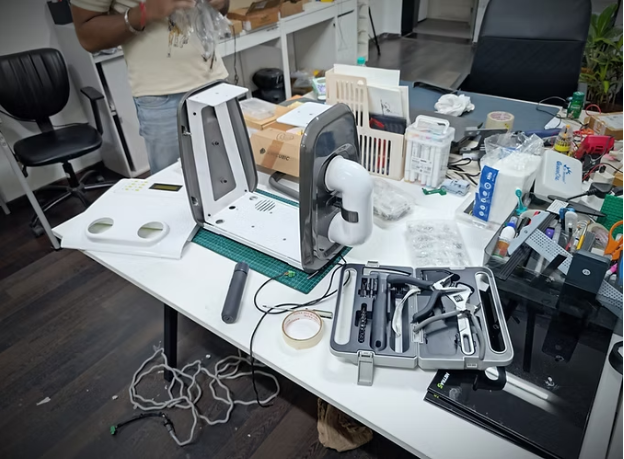
A promising product idea is only the beginning of the product-development journey. Turning that idea into a physical product requires careful planning, design, engineering, testing, and refinement. Before investing in expensive tooling or large-scale manufacturing, businesses need to understand whether their concept can actually work in the real world.
This is where prototype development services become valuable. A prototype provides a physical representation of a product that can be examined, tested, modified, and improved before production begins. It can help designers and engineers identify problems early, understand how users interact with a product, and make better decisions about materials and manufacturing.
What Is Prototype Development?
Prototype development is the process of transforming a product concept or digital design into a physical model for evaluation and testing. A prototype can serve different purposes depending on the stage of development. An early model may be created primarily to evaluate the shape, proportions, or ergonomics of a product. A later prototype may include functional components and mechanisms so that engineers can test how the product performs.
Modern prototyping can involve technologies such as 3D printing, CNC machining, vacuum casting, and other fabrication methods. The appropriate technique depends on factors such as product complexity, material requirements, functional objectives, and the level of accuracy needed.
Why Prototyping Is Important
Developing a product entirely through digital models can leave certain practical issues undiscovered. A product may look excellent on a screen but feel uncomfortable when held, have insufficient space for internal components, or present difficulties during assembly. A physical prototype allows these issues to become visible much earlier.
For example, designers can evaluate whether a button is positioned correctly, whether a handle is comfortable, whether components fit together, or whether a particular material is suitable for the intended application.
Identifying these problems before production tooling is created can help reduce the risk of expensive redesigns and production delays.
From Concept to Physical Prototype
Effective prototype development usually follows a structured process.
1. Understanding the Product Requirement
The process begins with a clear understanding of what the product is expected to achieve. Designers and engineers need to consider the target user, intended application, operating environment, dimensions, performance expectations, materials, and other relevant constraints.
A clear product requirement helps establish the boundaries within which the design must work and provides a foundation for subsequent development.
2. Concept Development
Once the requirements are understood, different design concepts can be explored. Sketches, diagrams, CAD models, and visualisations can be used to investigate different forms and approaches.
Exploring multiple concepts at an early stage gives teams the opportunity to compare alternatives before investing heavily in one direction.
3. Engineering Development
A product also needs to function reliably. Engineering considerations may include component construction, mechanisms, structural requirements, material properties, tolerances, joints, fasteners, and assembly methods.
Material selection is equally important because the wrong material can affect durability, weight, appearance, cost, and overall product performance. An experienced engineering material design service can help businesses assess material properties and select suitable options for the intended application and manufacturing process.
4. Building the Prototype
Once the design reaches an appropriate level of development, a physical prototype can be produced. The selected prototyping technology depends on what needs to be evaluated.
For example, 3D printing can be useful for quickly producing complex forms and checking fit or ergonomics, while CNC machining can be appropriate when precise components or production-like materials are required.
5. Testing and Iteration
A prototype is rarely the final answer. Testing often reveals areas that need improvement. The design may go through several cycles of modification and prototyping before reaching a satisfactory solution.
This iterative process allows teams to gradually improve the product rather than attempting to achieve a perfect design in a single stage.
Types of Prototypes
Different prototypes serve different purposes.
Visual Prototypes
Visual prototypes primarily demonstrate the product’s appearance. They can help stakeholders evaluate proportions, styling, surface details, colours, and finishes.
These models can be useful during design reviews and presentations when the primary objective is to communicate how the final product may look.
Functional Prototypes
Functional prototypes are designed to demonstrate how a product or mechanism operates. They may include working components, switches, moving parts, electronics, or other functional elements.
These prototypes can provide valuable information about usability and performance before production.
Engineering Prototypes
Engineering prototypes focus more heavily on technical validation. They can be used to assess structural integrity, component integration, assembly, tolerances, and other engineering considerations.
Production-Representative Prototypes
At later stages, teams may create prototypes using processes and materials that more closely resemble the intended production method.
These models can help evaluate manufacturing feasibility, material performance, assembly processes, and final product quality before moving into large-scale production.
The Role of Materials in Prototyping
Material selection can significantly influence product performance and manufacturing.
A product intended for high-temperature environments may require different materials from one designed for ordinary consumer use. Similarly, products exposed to impact, moisture, chemicals, or repeated mechanical stress may require specific material characteristics.
Prototyping provides an opportunity to evaluate material choices before committing to large-scale production. Colour, Material, and Finish considerations can also influence how customers perceive a product.
For complex products, working with an engineering material design service can help connect material selection with structural requirements, manufacturing methods, durability, and the intended user experience.
Prototyping and Ergonomics
A product needs to work for people, not simply look good in a CAD model. Ergonomic evaluation is particularly important for products that users hold, operate, wear, or interact with frequently.
A physical prototype allows users and designers to assess grip, reach, controls, weight distribution, dimensions, and overall comfort.
Testing these factors early can help create products that are easier and more intuitive to use while reducing the possibility of costly design changes later in development.
Design for Manufacturing
One of the most important considerations in product development is whether the design can actually be manufactured at the desired scale.
Design for Manufacturing, commonly referred to as DFM, involves considering manufacturing processes and production constraints during the design stage rather than treating manufacturing as a final step.
Factors such as wall thickness, tolerances, tooling requirements, material behaviour, assembly methods, and production volumes can influence the design.
A prototype can help reveal manufacturing challenges before expensive production tooling is commissioned. Integrating design and manufacturing considerations early can therefore reduce unnecessary redesign and improve the transition from prototype to production.
How to Choose Prototype Development Services
Businesses evaluating prototype development services should look beyond the availability of fabrication equipment. The expertise of the development team can be equally important.
A capable partner should understand industrial design, engineering, materials, prototyping, usability, and manufacturing. This multidisciplinary perspective can help ensure that the prototype is developed for a specific purpose rather than simply being a physical copy of a digital model.
Businesses should also consider whether the provider can support multiple iterations. Since product development is an iterative process, the ability to modify designs, test alternatives, and produce revised prototypes can be valuable.
Confidentiality is another consideration, particularly for new inventions or products that have not yet been launched. Appropriate agreements and clear communication around intellectual property can help protect sensitive project information.
Prototyping Across Different Industries
Prototype development is relevant across a wide range of industries. Consumer electronics, healthcare products, automotive components, industrial equipment, sports products, home products, and other physical goods can all benefit from physical testing before production.
The specific prototype requirements will differ depending on the product. A medical device may require close attention to ergonomics and regulatory considerations, while an automotive component may place greater emphasis on structural performance and manufacturing tolerances.
Regardless of the industry, the underlying objective remains similar: identify potential problems early and improve the product before full-scale production.
Conclusion
Prototype development provides an important bridge between an early product concept and a production-ready design. By creating physical models, businesses can evaluate form, functionality, ergonomics, materials, engineering considerations, and manufacturing feasibility before making major production investments.
For businesses seeking professional prototype development services alongside industrial design, engineering, CAD modelling, prototyping, and production support, Studio701 provides an integrated product-development approach designed to help transform ideas into functional, manufacturable products.